
Published date 25th May, 2026
The global ecommerce industry is evolving rapidly, and multi-vendor marketplaces have become one of the most profitable online business models in 2026. From B2B marketplaces and niche ecommerce platforms to service marketplaces and hyperlocal delivery apps, entrepreneurs are increasingly choosing marketplace business models due to their scalability, inventory flexibility, and revenue potential.
Businesses today are no longer limited to selling their own products. Instead, they can onboard multiple vendors, generate commissions from transactions, and create a thriving digital ecosystem similar to platforms like Amazon, eBay, and Etsy.
However, choosing the right multivendor marketplace platform is one of the most important decisions for marketplace startups and enterprises. The right platform can help you launch faster, scale efficiently, reduce operational costs, and offer better experiences to vendors and customers.
Table of Contents
- What is a Multi-vendor Marketplace Platform?
- Popular Examples of Multi-vendor Marketplace Platforms
- Different Types of Multi-vendor Marketplace Platforms
- Top 10 Multi-vendor Marketplace Platforms in 2026
- Comparison Table: Top Multi-vendor Marketplace Platforms
- Pricing Comparison for Each Marketplace Platform
- Which One is Best to Launch Your Multivendor Marketplace?
- Conclusion
- FAQs
What is a Multi-vendor Marketplace Platform?
A multi-vendor marketplace platform is a software solution that allows multiple independent sellers or vendors to register, list products/services, manage orders, and sell through a single online storefront.
Unlike traditional ecommerce websites where only one business sells products, a multivendor ecommerce platform enables many vendors to operate together under one ecosystem.
The marketplace owner manages:
- Vendor onboarding
- Commission structure
- Product approvals
- Payments
- Customer experience
- Marketing activities
Popular Examples of Multi-vendor Marketplace Platforms
| Marketplace Type | Popular Example | Description |
| B2C Marketplaces | Amazon | Allows multiple sellers to sell products directly to consumers |
| Handmade & Craft Marketplaces | Etsy | Focuses on handmade, vintage, and creative products |
| B2B Wholesale Marketplaces | Alibaba | Connects manufacturers, wholesalers, and distributors globally |
| Service Marketplaces | Fiverr | Enables freelancers to offer digital services |
| Rental Marketplaces | Airbnb | Allows property owners to rent accommodations |
| Grocery Delivery Marketplaces | Instacart | Connects grocery stores with local consumers |
| Fashion Marketplaces | Poshmark | Multi-vendor platform focused on fashion and apparel |
| Hyperlocal Delivery Platforms | DoorDash | Connects restaurants and local delivery customers |
| Automotive Marketplaces | CarGurus | Allows dealers and sellers to list vehicles |
| Learning Marketplaces | Udemy | Lets instructors sell online courses |
The marketplace owner earns revenue through:
- Vendor commissions
Example: Charging vendors 5–15% commission on every order placed. - Subscription fees
Example: Monthly vendor membership plans for premium selling features. - Featured listings
Example: Charging sellers to display products on the homepage or top search results. - Advertising
Example: Sponsored banners, promoted products, and vendor advertisements. - Transaction fees
Example: Fixed payment processing fees per successful transaction.
Different Types of Multi-vendor Marketplace Platforms
Different industries require different marketplace models. Each type of multivendor marketplace platform is designed to solve unique business requirements, customer expectations, and operational workflows. Below are the major types of multivendor ecommerce marketplace platforms along with examples and use cases.
1. B2C Marketplace Platforms
B2C (Business-to-Consumer) marketplace platforms allow multiple businesses or sellers to sell products directly to end customers through a centralized online marketplace. These platforms are highly popular in industries like fashion, electronics, beauty, grocery, and lifestyle products.
B2C marketplaces generally focus on customer experience, fast product discovery, secure checkout, reviews, promotions, and smooth logistics management. They are ideal for startups looking to aggregate products from different vendors under one platform.
Examples
- Amazon
- Etsy
- Walmart
Best For
- Retail startups
- D2C brands
- Fashion marketplaces
- Electronics marketplaces
- Grocery delivery apps
2. B2B Marketplace Platforms
B2B (Business-to-Business) marketplace platforms are designed for wholesalers, distributors, manufacturers, and suppliers who sell products in bulk quantities to other businesses. These platforms usually include enterprise-focused features such as RFQ management, MOQ support, custom quotations, bulk ordering, and tiered pricing.
B2B marketplaces often require advanced workflows and account management systems because transactions are typically larger and more complex than B2C marketplaces. They are highly suitable for industrial commerce and wholesale trade.
Examples
- Alibaba
- IndiaMART
- Faire
Best For
- Wholesale marketplaces
- Industrial suppliers
- Manufacturers
- Bulk trading businesses
- Global sourcing platforms
Launch a Feature-Rich Marketplace Tailored to Your Business Model
3. Service Marketplace Platforms
Service marketplace platforms connect service providers with customers looking for professional or on-demand services. Instead of physical products, these marketplaces focus on bookings, appointments, consultations, or freelance projects.
These platforms commonly include scheduling systems, live chat, reviews, payment escrow, and service categorization features. Service marketplaces are growing rapidly due to the increasing demand for freelance, remote, and gig economy services.
Examples
- Fiverr
- Upwork
- TaskRabbit
Best For
- Freelance marketplaces
- Home service businesses
- Tutoring platforms
- Appointment booking startups
- Gig economy platforms
4. Rental Marketplace Platforms
Rental marketplace platforms allow users to rent products, vehicles, properties, equipment, or spaces for a temporary duration. These platforms operate on booking-based business models and usually include availability calendars, rental duration settings, deposits, and booking management systems.
The popularity of the sharing economy has significantly increased the demand for rental marketplaces across industries such as travel, transportation, real estate, and equipment leasing.
Examples
- Airbnb
- Turo
- Vrbo
Best For
- Vacation rental startups
- Car rental businesses
- Equipment rental marketplaces
- Property rental platforms
- Sharing economy businesses
5. Hyperlocal Marketplace Platforms
Hyperlocal marketplace platforms focus on connecting local vendors and nearby customers within a specific geographic area. These marketplaces emphasize fast deliveries, real-time order tracking, and location-based services.
Hyperlocal marketplaces are widely used for food delivery, grocery delivery, pharmacy services, and local commerce businesses. Their success heavily depends on logistics optimization and local vendor partnerships.
Examples
- DoorDash
- Instacart
- Uber Eats
Best For
- Food delivery apps
- Grocery marketplaces
- Pharmacy delivery startups
- Local commerce businesses
- City-focused delivery platforms
Top 10 Multi-vendor Marketplace Platforms in 2026
1. Yo!Kart
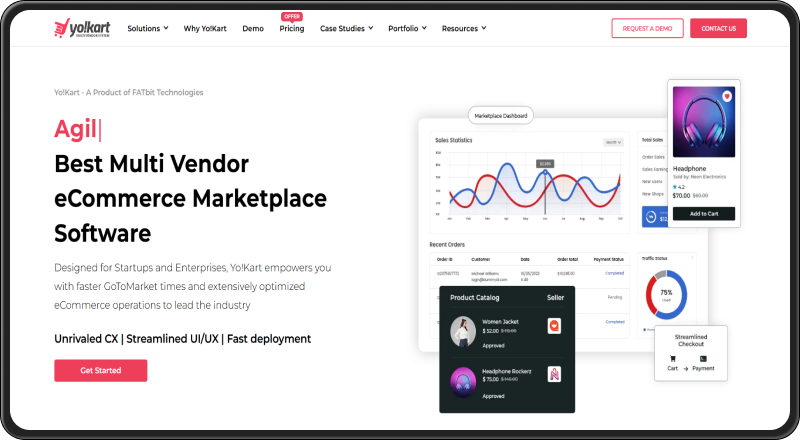
Yo!Kart is one of the leading self-hosted multivendor ecommerce marketplace platforms designed for startups, SMEs, and enterprises. Built specifically for marketplace businesses, it offers a powerful set of built-in ecommerce features without requiring multiple third-party plugins.
The platform supports B2C, B2B, wholesale, rental, and niche marketplace business models. It is particularly known for its one-time payment model, lifetime ownership, scalability, and customization flexibility.
Key Features
- Lifetime license with self-hosted deployment
- Multi-vendor management
- Separate vendor dashboards
- Advanced commission management
- Multi-language and multi-currency support
- B2B functionality
- Mobile apps support
- Tax and shipping management
- SEO-friendly architecture
- GDPR compliance
Pros
- One-time payment model
- Full source code ownership
- Highly scalable
- No dependency on plugins
- Suitable for B2B and B2C marketplaces
- Strong customization capabilities
Cons
- Requires hosting setup
- Initial learning curve for non-technical users
Schedule a One-on-One Demo to Experience Yo!Kart FirstHand
2. Sharetribe
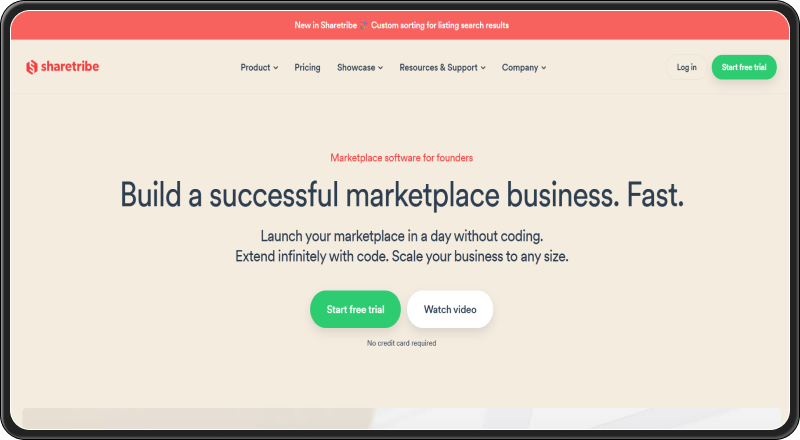
Sharetribe is a popular SaaS-based multivendor marketplace platform that helps entrepreneurs launch online marketplaces quickly without extensive technical expertise. The platform is widely used for service marketplaces, rental marketplaces, and niche product marketplaces due to its easy setup process and flexible marketplace templates.
Sharetribe offers both no-code and developer-focused solutions, allowing businesses to start with a basic marketplace MVP and gradually scale through APIs and custom integrations. Its cloud-hosted infrastructure reduces operational complexity, making it suitable for startups looking for faster go-to-market strategies.
Key Features
- No-code marketplace builder
- Vendor onboarding system
- Stripe payment integration
- Booking and scheduling support
- Marketplace templates
- API access for customization
- Mobile-responsive storefront
- Order and transaction management
- Multi-category marketplace support
- Hosted cloud infrastructure
Pros
- Easy to launch and manage
- Fast MVP deployment
- Suitable for non-technical founders
- Hosted infrastructure included
- Flexible marketplace business models
Cons
- Monthly recurring pricing
- Limited advanced customization
- Transaction fees may increase operational costs
- Scalability can become expensive over time
3. CS-Cart Multi-Vendor
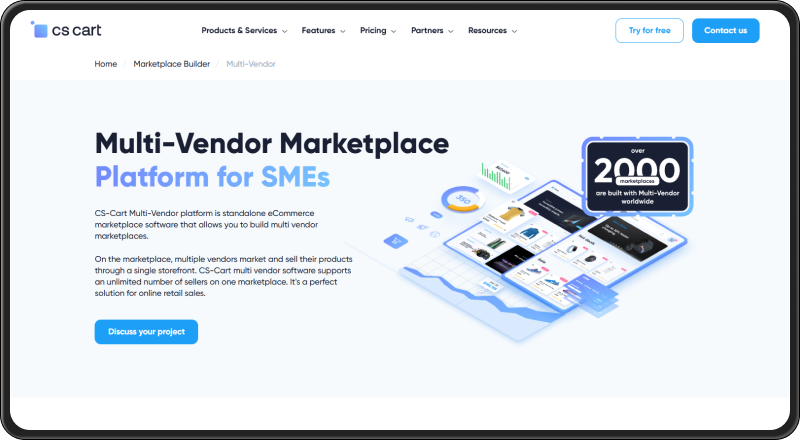
CS-Cart offers a dedicated multi-vendor marketplace solution built specifically for ecommerce businesses that require vendor management and marketplace automation features. The platform is known for its marketplace-focused architecture and extensive admin controls for managing sellers, products, commissions, and customer orders.
CS-Cart Multi-Vendor is a self-hosted solution that provides source code access and flexibility for customization. It is suitable for startups and medium-sized businesses looking for a scalable multivendor ecommerce platform with a wide range of built-in features and third-party integrations.
Key Features
- Vendor management system
- Separate vendor storefronts
- Product approval workflows
- Advanced commission settings
- SEO management tools
- Marketing and promotion features
- Multi-language support
- Mobile-responsive themes
- Shipping and tax management
- Extensive add-ons marketplace
Pros
- Marketplace-focused functionality
- Strong vendor management features
- Good customization flexibility
- Large ecosystem of add-ons
- Self-hosted ownership model
Cons
- Add-ons can increase total costs
- Some advanced features require plugins
- UI may feel outdated in certain areas
- Requires technical setup and maintenance
4. Magento Open Source (Adobe Commerce)
Adobe offers Magento, a highly customizable ecommerce platform widely used by enterprises and large-scale ecommerce businesses. While Magento is not primarily a marketplace platform, businesses can transform it into a multivendor marketplace through third-party extensions and custom development.
Magento is known for its enterprise-grade scalability, extensive customization capabilities, and powerful ecommerce architecture. It is particularly suitable for businesses with strong technical teams and large budgets that require complete flexibility and advanced ecommerce functionalities.
Key Features
- Enterprise-level scalability
- Advanced catalog management
- Multi-store support
- API-first architecture
- Powerful customization capabilities
- Third-party marketplace extensions
- Mobile commerce support
- Advanced SEO tools
- Customer segmentation features
- Global ecommerce support
Pros
- Extremely customizable platform
- Enterprise-ready infrastructure
- Strong developer ecosystem
- Suitable for large marketplaces
- Advanced ecommerce functionalities
Cons
- High development costs
- Requires technical expertise
- Marketplace features need extensions
- Maintenance and hosting can be expensive
5. Shopify Plus
Shopify is one of the most widely used SaaS ecommerce platforms globally, offering hosted infrastructure and easy store management capabilities. Businesses can convert Shopify into a multivendor ecommerce marketplace using third-party marketplace apps and integrations.
Shopify Plus is particularly popular among D2C brands and growing ecommerce businesses due to its user-friendly interface, scalability, and extensive app ecosystem. It is ideal for businesses seeking a managed ecommerce solution with minimal technical maintenance requirements.
Key Features
- Hosted cloud infrastructure
- Third-party marketplace apps
- Mobile-responsive themes
- Secure payment gateways
- Inventory management tools
- Multi-channel selling
- App marketplace integrations
- Marketing automation tools
- Analytics and reporting
- Fast checkout experience
Pros
- Beginner-friendly platform
- Easy setup and management
- Reliable hosting infrastructure
- Large app ecosystem
- Strong brand recognition
Cons
- Marketplace features rely on apps
- Recurring monthly pricing
- Additional transaction fees may apply
- Limited source code ownership
6. Arcadier
Arcadier is a SaaS-based marketplace platform that enables businesses to launch product, service, rental, and procurement marketplaces. The platform is designed to simplify marketplace creation through its hosted infrastructure and plugin-based architecture.
Arcadier supports multiple marketplace business models and provides flexibility through APIs and third-party integrations. It is commonly used by startups and SMEs looking for a quick and manageable marketplace launch without investing heavily in custom development.
Key Features
- Hosted marketplace infrastructure
- Product and service marketplace support
- Plugin marketplace ecosystem
- Vendor management tools
- API integrations
- Payment gateway integrations
- Mobile-responsive interface
- Booking and rental functionality
- Multi-category marketplace support
- Admin analytics dashboard
Pros
- Quick marketplace deployment
- Supports multiple business models
- Cloud hosting included
- Easy marketplace management
- API flexibility for integrations
Cons
- Scaling costs can increase significantly
- Limited source code access
- Customization options may be restricted
- Dependency on plugins for advanced features
7. Mirakl

Mirakl is an enterprise-grade marketplace platform designed for large retailers, enterprises, and global brands looking to build scalable online marketplaces. The platform focuses heavily on automation, vendor onboarding, and enterprise marketplace operations.
Mirakl is widely adopted by major retail organizations due to its robust marketplace infrastructure and integration capabilities. It is best suited for businesses that require enterprise-level scalability, complex workflows, and advanced marketplace management systems.
Key Features
- Enterprise marketplace automation
- Advanced vendor onboarding
- Catalog and inventory management
- Enterprise integrations
- Automated seller workflows
- Multi-channel commerce support
- Global marketplace capabilities
- Order management system
- Analytics and reporting
- Scalable cloud infrastructure
Pros
- Enterprise-grade scalability
- Strong automation capabilities
- Trusted by global enterprises
- Advanced workflow management
- Robust marketplace operations
Cons
- Very expensive for startups
- Complex implementation process
- Requires enterprise-level resources
- Not ideal for small businesses
8. BigCommerce Multi-Vendor Solutions
BigCommerce is a SaaS ecommerce platform that supports marketplace creation through integrations and third-party applications. The platform is known for its performance, scalability, and headless commerce capabilities.
BigCommerce is commonly used by mid-sized and enterprise ecommerce businesses that require flexibility and strong ecommerce infrastructure. Businesses can integrate marketplace functionalities while leveraging BigCommerce’s hosted environment and API-first architecture.
Key Features
- SaaS ecommerce infrastructure
- Headless commerce support
- Multi-channel selling
- API-first architecture
- Marketplace integrations
- Mobile-optimized storefronts
- SEO-friendly framework
- Inventory management
- Payment gateway integrations
- Analytics and reporting tools
Pros
- Strong ecommerce performance
- Scalable cloud infrastructure
- Good SEO capabilities
- Flexible API integrations
- Reliable hosting environment
Cons
- Marketplace features require third-party tools
- Recurring subscription costs
- Customization can be limited compared to self-hosted platforms
- Additional app costs may arise
9. Dokan for WooCommerce
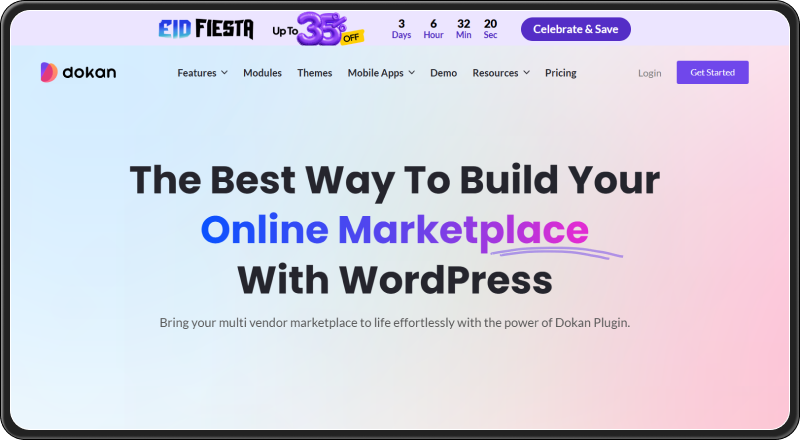
Dokan is a popular multivendor marketplace plugin built for WordPress and WooCommerce websites. It allows businesses to transform a standard WooCommerce store into a fully functional multi-vendor ecommerce marketplace.
Dokan is widely preferred by small businesses and startups due to its affordability, WordPress compatibility, and extensive plugin ecosystem. It provides essential marketplace features while leveraging the flexibility and familiarity of the WordPress environment.
Key Features
- WooCommerce integration
- Vendor dashboard system
- Product and order management
- Commission management
- Vendor withdrawal management
- Shipping configuration
- Mobile-responsive marketplace
- Plugin and theme compatibility
- SEO-friendly structure
- Coupon and promotion support
Pros
- Affordable startup option
- Easy WordPress integration
- Large plugin ecosystem
- Beginner-friendly interface
- Flexible marketplace customization
Cons
- Heavy plugin dependency
- Performance issues at scale
- Security management responsibility
- Frequent maintenance requirements
Looking for Reliable Readymade Solution to Launch Your Multi-Vendor Marketplace?
10. Nautical Commerce
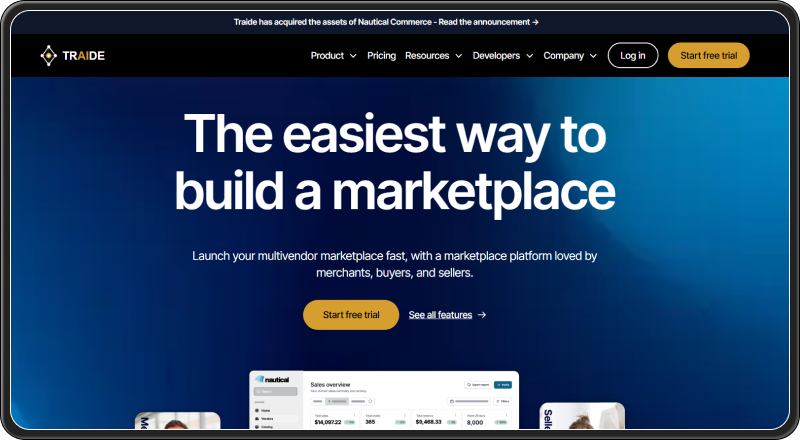
Nautical Commerce is a modern marketplace infrastructure platform designed for enterprise-grade multivendor marketplaces. The platform focuses on API-driven commerce, vendor operations, and scalable marketplace workflows.
Nautical Commerce is suitable for businesses looking to build highly customized and scalable marketplace ecosystems with advanced operational controls. Its flexible infrastructure makes it appealing for enterprise startups and digital commerce companies.
Key Features
- API-first marketplace infrastructure
- Vendor operations management
- Payment splitting capabilities
- Order orchestration system
- Flexible marketplace workflows
- Enterprise integrations
- Inventory synchronization
- Analytics and reporting tools
- Scalable cloud architecture
- Multi-vendor support
Pros
- Modern and scalable architecture
- Strong API flexibility
- Enterprise-focused marketplace capabilities
- Advanced operational management
- Suitable for custom marketplace ecosystems
Cons
- Premium enterprise pricing
- Requires technical implementation expertise
- Not beginner-friendly
- Limited suitability for small startups
Comparison Table: Top Multi-vendor Marketplace Platforms
| Platform | Pricing Model | Source Code Ownership | Best For | Mobile Apps | B2B Support |
| Yo!Kart | One-time payment | Yes | Startups to Enterprises | Yes | Yes |
| Sharetribe | Monthly subscription | Limited | MVP startups | Limited | No |
| CS-Cart | One-time payment | Yes | SMB marketplaces | Yes | Moderate |
| Magento | License + development cost | Yes | Enterprises | Yes | Yes |
| Shopify Plus | Subscription | No | D2C brands | Yes | Limited |
| Arcadier | Subscription | Limited | SMEs | Yes | Moderate |
| Mirakl | Enterprise pricing | No | Large enterprises | Yes | Yes |
| BigCommerce | Subscription | No | Mid-size businesses | Yes | Moderate |
| Dokan | Plugin pricing | Partial | Small businesses | Limited | No |
| Nautical Commerce | Enterprise pricing | No | Enterprise marketplaces | Yes | Yes |
Pricing Comparison for Each Marketplace Platform
Pricing is one of the most important factors when choosing a multivendor marketplace platform. Some platforms offer one-time licensing models with full ownership, while others operate on recurring monthly or enterprise subscription pricing. Businesses should evaluate not only the initial setup cost but also long-term expenses related to hosting, add-ons, customization, maintenance, and scalability.
The right pricing model depends on your business goals, technical requirements, and expected marketplace growth. Startups often prefer affordable and scalable solutions, whereas enterprises may invest in premium infrastructure and advanced marketplace automation capabilities.
| Platform | Starting Price |
| Yo!Kart | Starts around $1,249 one-time |
| Sharetribe | Starts around $39/month |
| CS-Cart Multi-Vendor | Starts around $1,450 one-time |
| Magento / Adobe Commerce | Enterprise custom pricing |
| Shopify Plus | Starts around $2,000/month |
| Arcadier | Starts around $100+/month |
| Mirakl | Enterprise custom pricing |
| BigCommerce | Starts around $39/month |
| Dokan | Starts around $149/year |
| Nautical Commerce | Custom enterprise pricing |
Which One is Best to Launch Your Multivendor Marketplace?
The best multivendor ecommerce marketplace platform ultimately depends on your business model, target audience, scalability requirements, technical expertise, and overall budget. Some businesses prioritize fast deployment and ease of use, while others require complete source code ownership, advanced customization capabilities, and long-term scalability for enterprise growth.
Startups and small businesses often look for cost-effective solutions that offer built-in marketplace functionality with minimal operational complexity. On the other hand, enterprises may require highly customizable platforms with robust integrations, automation, and support for complex vendor workflows. Evaluating factors such as pricing structure, hosting flexibility, third-party dependencies, and marketplace-specific features can help businesses choose the right platform for sustainable growth.
Here’s a quick recommendation guide:
| Requirement | Recommended Platform |
| Fast MVP Launch | Sharetribe |
| Enterprise Marketplace | Mirakl |
| WordPress-based Marketplace | Dokan |
| SaaS Ecommerce Marketplace | Shopify Plus |
| Large-scale Custom Marketplace | Magento |
| Cost-effective Scalable Marketplace | Yo!Kart |
For startups and growing businesses looking for a balance between affordability, scalability, ownership, and advanced marketplace functionality, Yo!Kart stands out as one of the strongest options in 2026.
Unlike SaaS platforms that involve ongoing monthly expenses and plugin dependencies, Yo!Kart provides:
- One-time payment ownership
- Built-in marketplace features
- Scalability for long-term growth
- B2B and B2C marketplace support
- Extensive customization capabilities
This makes it particularly suitable for entrepreneurs planning to build a sustainable and scalable marketplace business.
Build a Marketplace Designed for Long-Term Success
Conclusion
The marketplace economy continues to grow rapidly in 2026, creating massive opportunities for entrepreneurs and enterprises alike. Choosing the right multivendor ecommerce marketplace platform is critical for long-term business success.
While there are many excellent marketplace solutions available, businesses should evaluate platforms based on:
- Budget
- Scalability
- Customization flexibility
- Ownership model
- Marketplace-specific features
- Long-term operational costs
If you are looking for a feature-rich, scalable, and cost-effective multivendor ecommerce platform, platforms like Yo!Kart provide a strong foundation for launching and growing modern marketplace businesses.
The right marketplace software can help you reduce development complexity, launch faster, and focus more on scaling your business.
FAQs
1. What is the best multivendor marketplace platform in 2026?
The best platform depends on your business needs. For startups and SMBs looking for ownership, scalability, and built-in marketplace functionality, Yo!Kart is considered one of the leading choices.
2. Which multivendor ecommerce platform is best for B2B marketplaces?
Platforms like Yo!Kart, Magento, and Mirakl offer strong B2B marketplace capabilities including bulk ordering, RFQ management, and tiered pricing.
3. Are SaaS marketplace platforms better than self-hosted platforms?
SaaS platforms are easier to launch quickly, but self-hosted platforms offer better ownership, customization, and long-term scalability.
4. How much does it cost to build a multivendor marketplace?
The cost can vary from a few hundred dollars to enterprise-level investments depending on the platform, customization, integrations, and business requirements.
5. Which marketplace platform provides source code ownership?
Platforms like Yo!Kart, CS-Cart, and Magento provide source code ownership, allowing businesses to customize and scale their marketplace freely.
6. Can I launch a niche marketplace using a multivendor ecommerce platform?
Yes, multivendor marketplace platforms can be used to launch niche marketplaces for fashion, electronics, groceries, rentals, services, B2B trading, and more.
Ready to Launch Your Multi-Vendor Marketplace Platform?
Contact UsPopular Posts